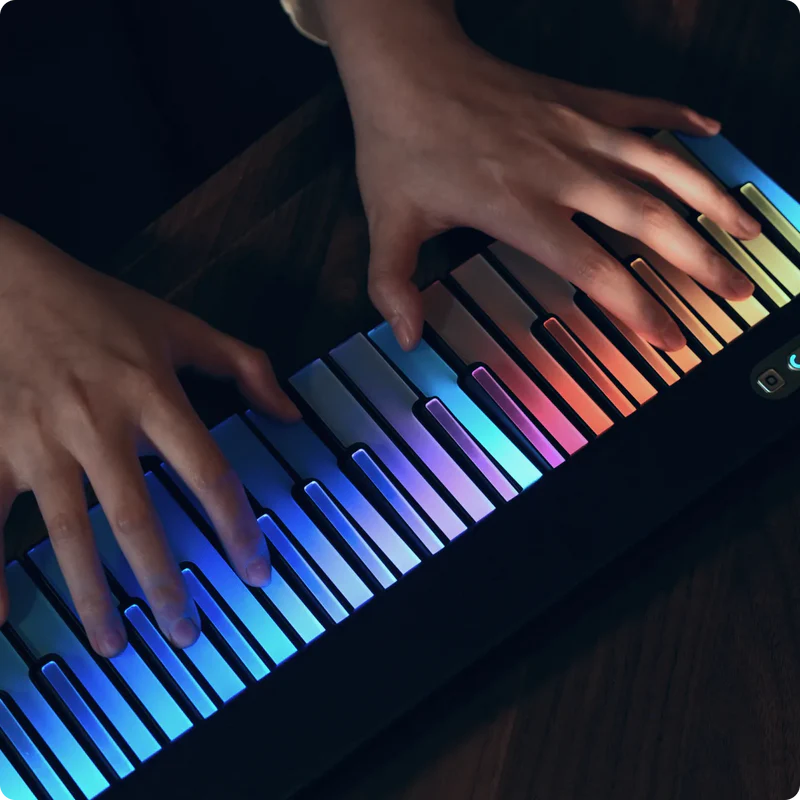
Choosing between a 61 vs 76 key keyboard can be confusing for beginners and seasoned players alike. The number of keys affects the music you can play, the space it takes, and how comfortable it is for practice.
In this guide, you’ll learn the pros and cons of 61-key vs 76-key keyboards, how to pick the right size for your needs, and examples of portable smart pianos like the PartyKeys Smart Keyboard that make learning easier.
Whether you’re a student, hobbyist, or traveling musician, choosing the right keyboard ensures proper technique, room fit, and a satisfying playing experience.
A 61-key keyboard is usually lightweight, portable, and perfect for beginners or small-handed players.
Key Benefits:
Limitations:
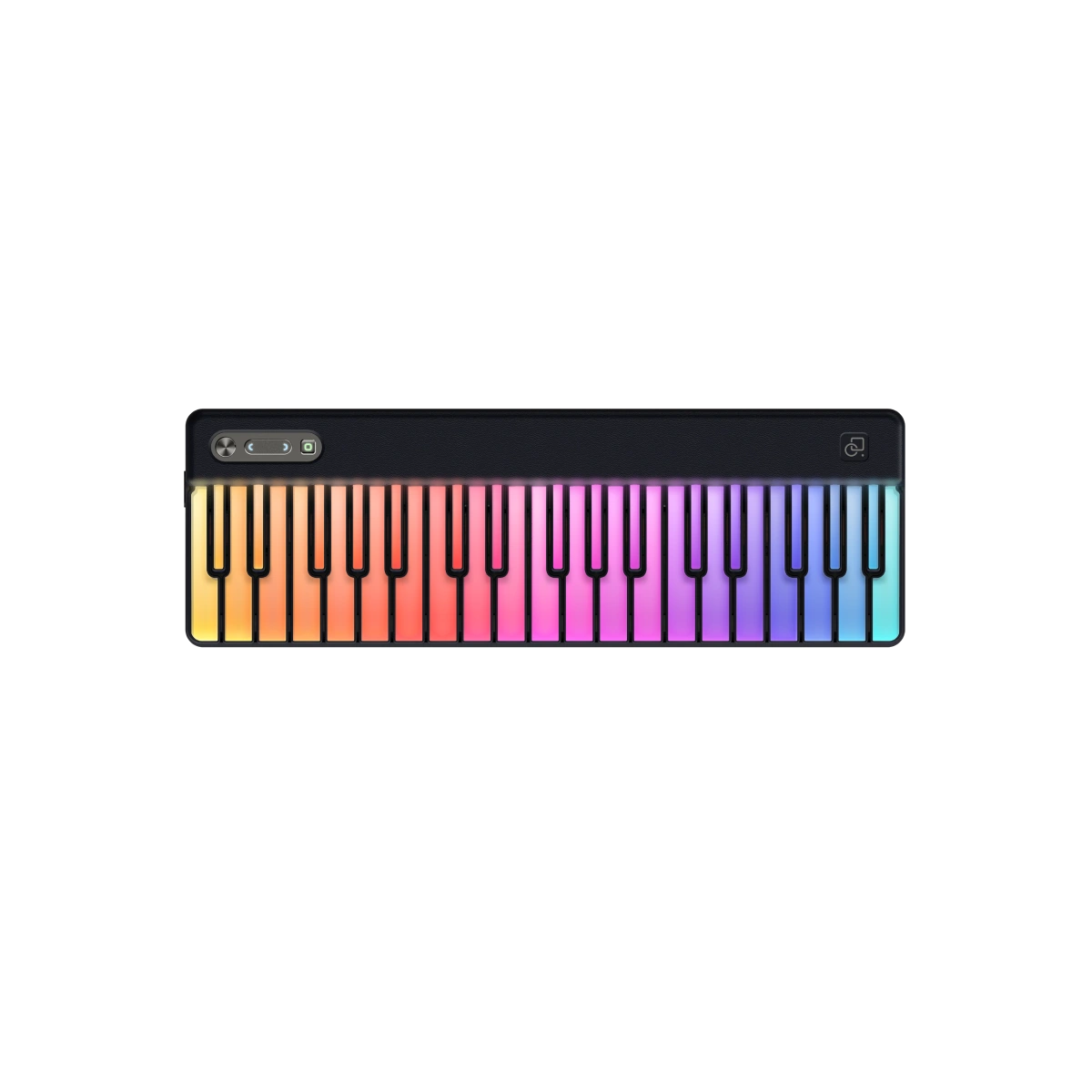
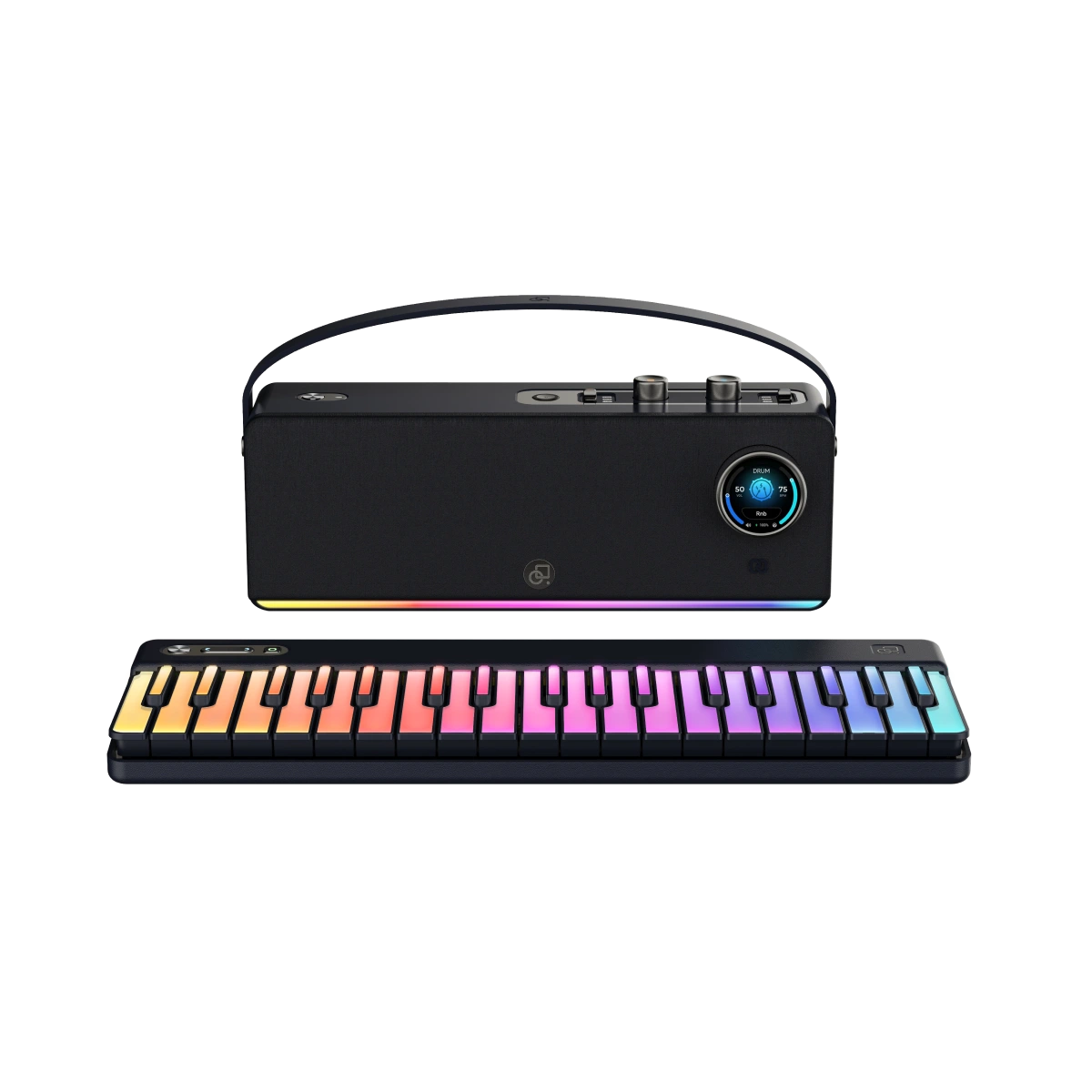
Example: The Smart Keyboard offers 61 keys with foldable, LED-guided keys, ideal for beginners or small spaces.

A 76-key keyboard provides extra notes, bridging the gap between portability and the full 88-key piano.
Key Benefits:
Limitations:
|
Feature |
61 Key Keyboard |
76 Key Keyboard |
|
Portability |
High – lightweight and foldable |
Moderate – slightly larger, heavier |
|
Learning Curve |
Beginner-friendly |
Intermediate/Advanced-friendly |
|
Range of Notes |
Limited – 5 octaves approx. |
Extended – 6+ octaves |
|
Space Requirement |
Small – fits desks and small rooms |
Medium – needs more room |
|
Suitable for Travel |
Yes |
Sometimes, depending on size |
|
App & Smart Features |
Usually available |
Usually available |


When deciding between 61 vs 76 key keyboards, portability can be a deciding factor:
Consider the frequency of transport — if you move between classrooms, studios, or gigs, the 61-key option may be more convenient.
Smart piano keyboards often integrate with apps for learning or production:
Selecting the right size ensures full compatibility with the apps you plan to use.
Understanding your available space helps prevent frustration and encourages consistent practice.
Your musical goals can influence key selection:
Matching key count to your preferred genres maximizes your practice and performance experience.
Price often reflects size, features, and brand:
Choosing between a 61 vs 76 key keyboard depends on your space, skill level, and musical goals. 61-key keyboards are ideal for beginners, travel, and small spaces, while 76-key keyboards provide extended range and versatility without the bulk of an 88-key piano.
For a portable, smart, and interactive learning experience, the Smart Keyboard is a perfect choice, available in 61 keys with foldable design and LED-guided learning
You can play most beginner and pop songs, but advanced classical pieces may require 76 or 88 keys.
Yes, most 76-key smart pianos are still foldable or lightweight, but slightly heavier than 61-key models.
Beginners often benefit from 61 keys for simplicity, while 76 keys offer more versatility as skills grow.
Absolutely. Models like PartyKeys Smart Keyboard support Bluetooth MIDI and interactive learning apps.
61 keys are generally easier for small-handed players due to smaller key spans and compact layout.
Yes. A 76-key keyboard covers more octaves and allows wider hand movement, making it feel closer to a full 88-key piano, especially for intermediate practice and expressive playing.
Most models use standard key width, but some portable or mini keyboards may have slightly smaller keys. Always check if the keyboard has full-size or mini keys before buying.
Both work well, but 76 keys give more range for two-hand chords, basslines, and layered sounds. Producers who prioritize portability often still choose 61 keys.
Absolutely. Beginners can learn on either size. A 76-key keyboard simply offers more room to grow, though it takes slightly more space and may cost more.
Read more

Best Keyboards for Small Hands (Kids & Adults)
Learning piano can be frustrating when the keys are too wide or spaced for smaller hands. The best smart piano keyboard for small hands provides a compact key layout, ergonomic design, and interact...

Weighted vs Semi‑Weighted vs Synth Action (Explained Simply)
When shopping for a smart piano keyboard, the type of key action makes a huge difference in feel, playability, and technique. But what’s the difference between weighted vs semi-weighted vs synth ac...