When you press a key on a wireless keyboard, how fast should you hear the sound? For typing emails, a few milliseconds of delay barely matters. But for playing music, even tiny delays can ruin your performance, throw off your timing, and make the instrument feel disconnected from your touch.
This question becomes critical when choosing wireless connectivity for MIDI keyboards and music production equipment. Two technologies dominate the wireless keyboard market: proprietary 2.4 GHz connections and Bluetooth. Understanding which offers genuinely low-latency performance could transform your music-making experience.
Latency measures the time between an action and its result. When you strike a piano key, your brain expects immediate audio feedback. This expectation comes from years of experience with acoustic instruments that produce sound the instant you touch them.
Electronic instruments introduce delay. The keyboard must detect your keypress, transmit that information to a sound source, process the MIDI data, generate audio, and finally output sound through speakers. Each step adds milliseconds.
Professional musicians generally consider latency under 10ms imperceptible. Between 10-20ms, most people notice subtle delay but can still play comfortably. Above 30ms, the lag becomes obvious and interferes with musical expression. Your fingers and ears fall out of sync, making it difficult to play with proper timing and feel.
Key Points:

Key Points:
BLE MIDI (Bluetooth Low Energy MIDI) Improvements:
|
Feature |
2.4 GHz Proprietary |
Bluetooth 5.0 + BLE MIDI |
|
Latency |
1-5 ms |
5-20 ms (under 16ms in optimized systems) |
|
Connection Type |
Requires USB dongle |
Universal device support |
|
Interference |
Low (dedicated link) |
Adaptive frequency hopping mitigates interference |
|
Multi-Device Support |
Limited |
Supports multiple simultaneous devices with proper sync |
|
Range |
~10 meters |
~10 meters (stable with BLE and Bluetooth 5.0) |
|
Audio Handling |
Keypress only, relies on connected device |
MIDI data only, audio generated locally |
|
Power Efficiency |
Low to moderate |
High (BLE optimized) |
|
Flexibility |
Low (tied to dongle) |
High (connects to phones, tablets, computers) |
Bluetooth Low Energy MIDI (BLE MIDI) fundamentally changed the wireless music landscape. Introduced as part of the MIDI 2.0 specification, BLE MIDI uses Bluetooth 4.0+ technology specifically optimized for transmitting MIDI data rather than compressed audio.
Here's the crucial difference: BLE MIDI doesn't transmit audio wirelessly. Instead, it sends lightweight MIDI messages containing only note information, velocity, timing, and controller data. These tiny packets of information travel much faster than compressed audio streams.
The wireless MIDI speaker category emerged directly from this technological advancement. By combining BLE MIDI connectivity with embedded sound chips, these speakers receive MIDI data with minimal delay, generate sounds locally through hardware synthesis, and output audio without the compression delays of traditional Bluetooth audio.
Testing reveals that properly implemented BLE MIDI systems consistently achieve latency under 16ms. This figure has become the benchmark for professional wireless MIDI speakers, representing the threshold where wireless performance becomes indistinguishable from wired connections during actual playing.
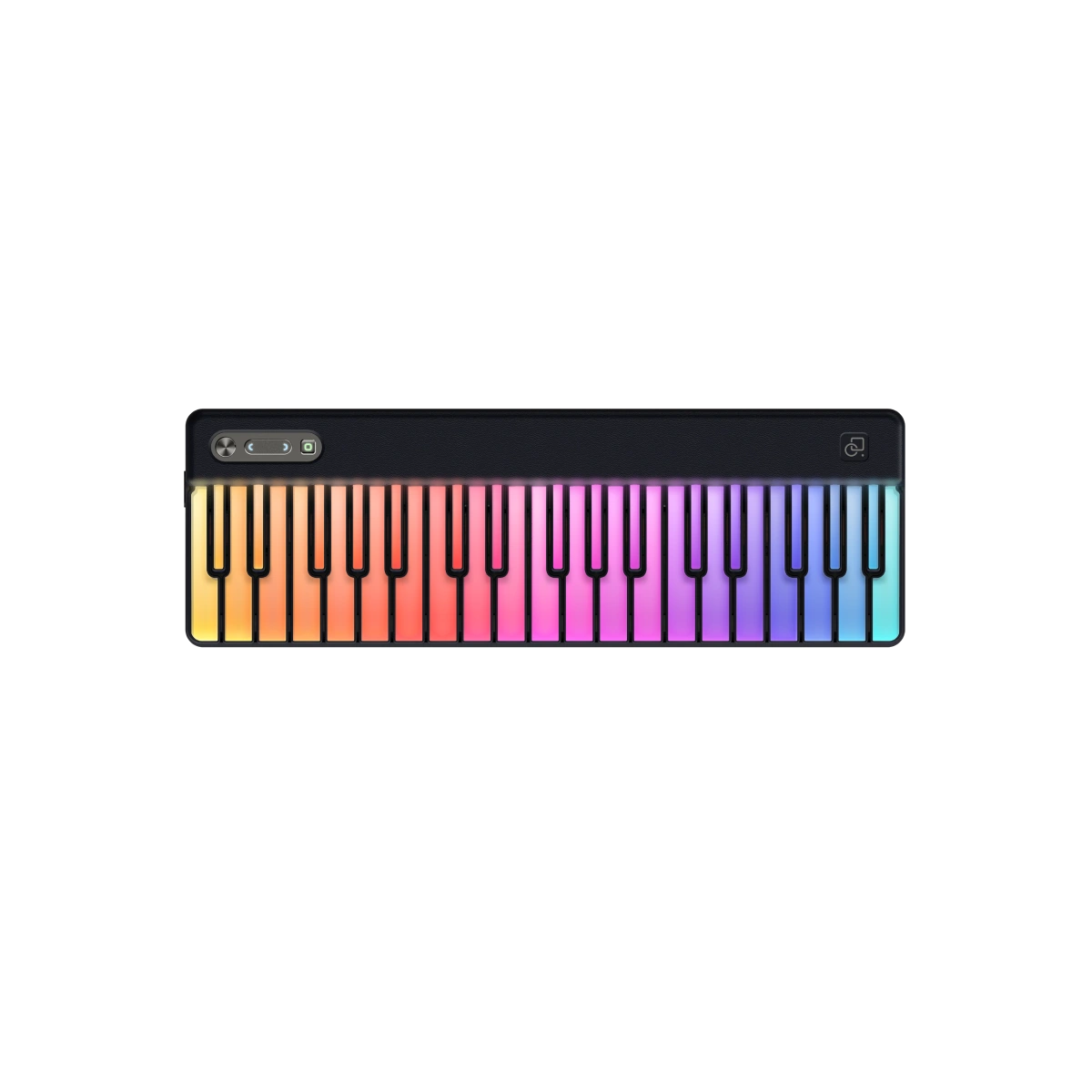
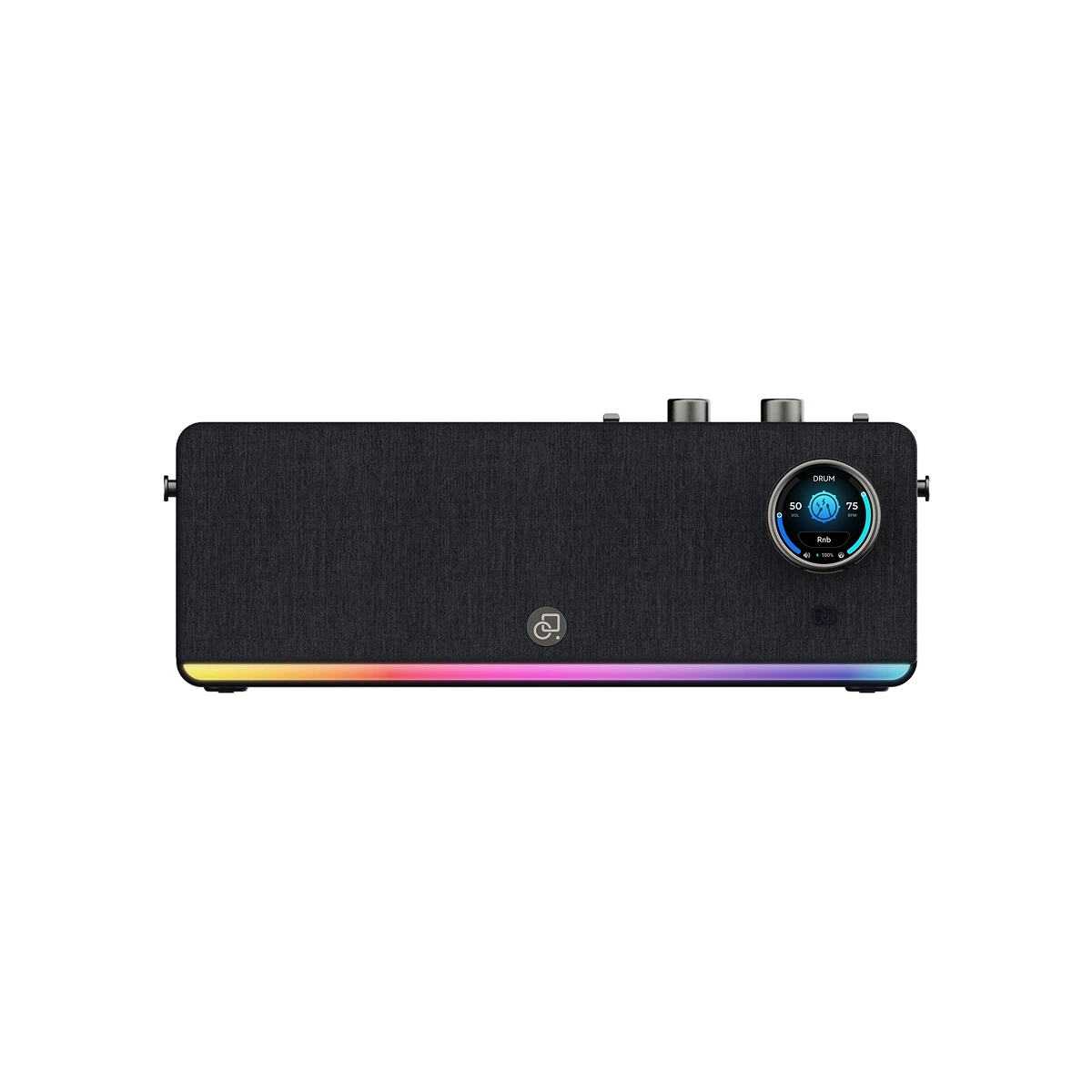
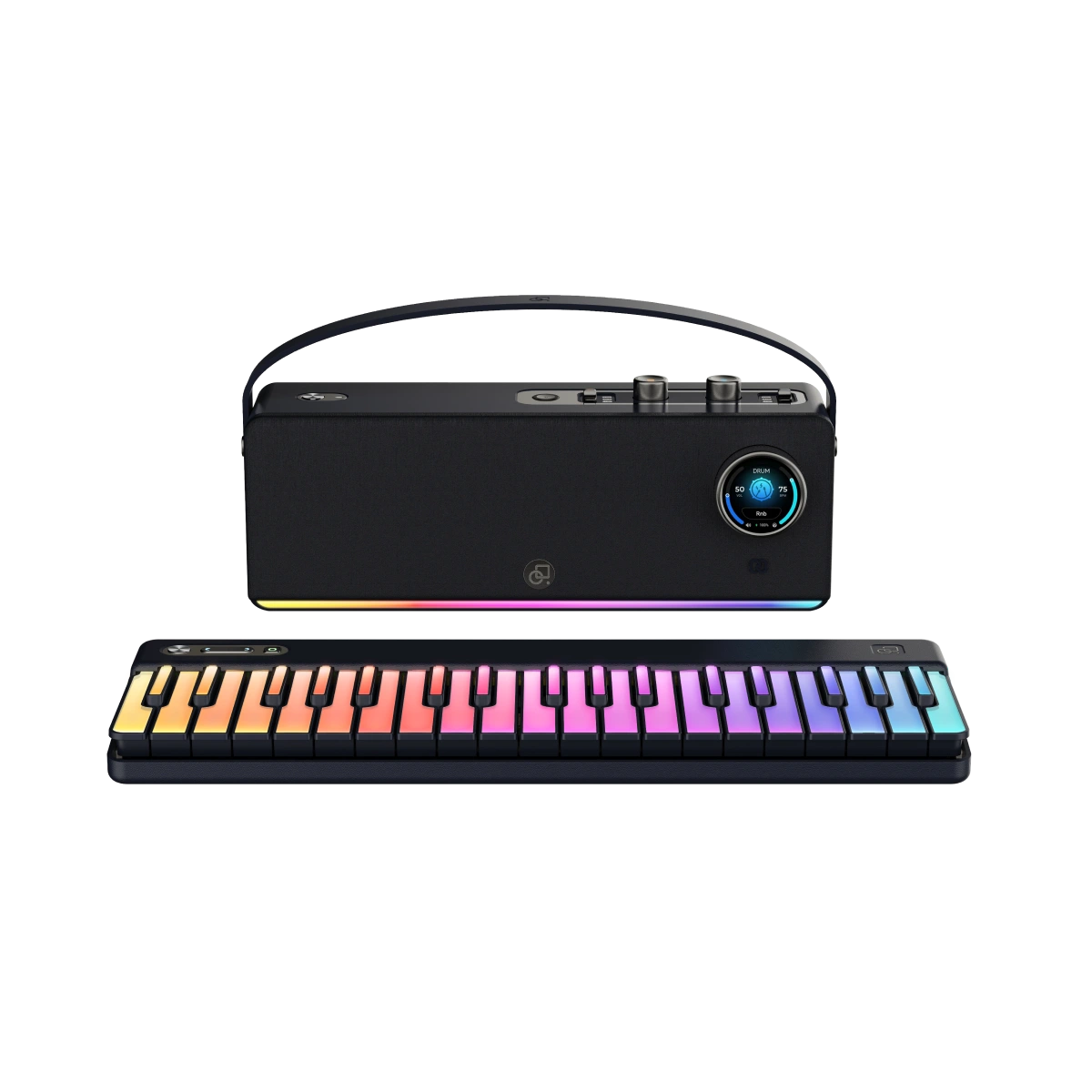
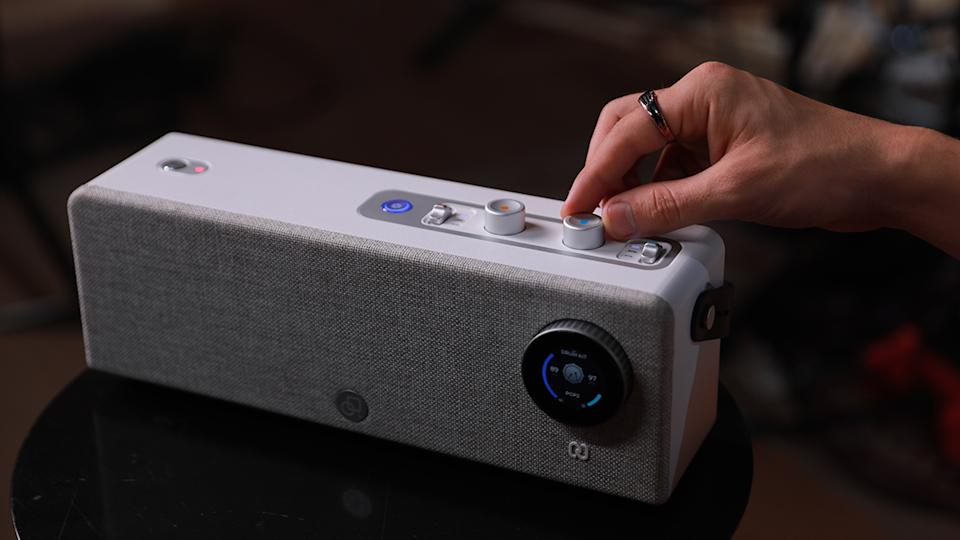
PartyStudio exemplifies this performance standard. Through rigorous testing and optimization, the system maintains latency within 16ms across its 10-meter wireless range. This responsiveness comes from several technical decisions working together.

The ability to connect multiple MIDI keyboards to a single speaker system introduces unique latency challenges. If each device experiences different delays, the resulting sound becomes unsynchronized, creating timing problems that make ensemble playing impossible.
Advanced wireless MIDI speakers solve this through sophisticated timing synchronization. The system measures latency for each connected device and applies timing corrections to ensure all keyboards remain perfectly synchronized.
This synchronization enables "one-man band" performances where a single musician controls multiple keyboards with different instrument sounds, all playing in perfect timing.
The technical implementation requires precise clock management and buffer coordination. The speaker must track timing information from multiple sources, account for their individual latencies, and align audio output so all sounds remain rhythmically accurate. Achieving this without introducing additional latency requires careful engineering.
Even with impressive wireless performance, wired MIDI connections retain advantages for specific situations. USB MIDI and traditional 5-pin DIN MIDI connections offer effectively zero latency, limited only by how quickly the receiving device can process incoming data.
Professional recording studios often prefer wired connections for this reason. When tracking final recordings, eliminating every possible source of timing uncertainty matters. Studio-grade audio interfaces can process MIDI input and generate audio with under 3ms of total latency, imperceptible even to trained musicians.
Wireless MIDI speakers address this by including wired MIDI options alongside Bluetooth connectivity. PartyStudio features a physical MIDI port that accepts standard MIDI cables, allowing musicians to choose wired connections when absolute minimum latency is essential or wireless connectivity when mobility matters more.

While latency captures most attention in wireless performance discussions, other factors equally influence the musical experience. A system with excellent latency but poor connection reliability still frustrates users. Comprehensive wireless solutions address multiple performance dimensions.
Connection Stability ensures your wireless link remains solid during performances. Modern BLE MIDI implementations rarely experience dropouts when used within their specified range. Quality wireless MIDI speakers include robust antenna designs and connection management algorithms that maintain solid links even when you move around.
Pairing Simplicity determines how quickly you can start making music. Traditional Bluetooth pairing requires navigating menus, searching for devices, entering codes, and confirming connections. NFC-enabled systems like PartyStudio simplify this to a single touch between speaker and keyboard, establishing instant connections without menu-diving.
So which technology offers genuinely low latency, 2.4 GHz or Bluetooth? The answer depends entirely on implementation and use case.
For basic typing keyboards or gaming controllers, proprietary 2.4 GHz connections currently offer the absolute lowest latency, often achieving 1-3ms response times. These systems excel at their specific tasks but offer limited flexibility for music applications.
For musical performance with MIDI keyboards and wireless speakers, modern Bluetooth 5.0 with BLE MIDI protocol delivers professional-grade latency under 16ms while providing universal compatibility, multi-device connectivity, and the flexibility to connect to various equipment without dongles or adapters.
Yes, modern BLE MIDI implementations achieve 5-20ms latency, well within professional standards. Musicians generally cannot perceive latency under 10ms, and anything under 20ms remains comfortable for performance. Systems maintaining under 16ms latency, like PartyStudio, perform identically to wired connections in real-world usage.
No, and this is crucial to understand. Bluetooth audio adds 100-200ms of latency due to codec compression. Wireless MIDI speakers avoid this by transmitting only MIDI data via BLE MIDI, then generating sounds locally through embedded sound chips. This architecture bypasses Bluetooth audio entirely, maintaining low latency.
Not with properly designed systems. Quality wireless MIDI speakers include sufficient bandwidth and processing power to handle multiple simultaneous connections. PartyStudio supports up to four MIDI devices concurrently while maintaining under 16ms latency for all connections through intelligent bandwidth management and timing synchronization.
Minimally, within the device's specified range. Bluetooth 5.0 systems maintain consistent latency across their full 10-meter range, typically adding only 1-2ms as distance increases. Beyond this range, connection stability becomes the concern rather than increased latency. Signals either work normally or disconnect rather than gradually degrading.
Only if you need absolute minimum latency for recording or never move your equipment. Wired connections offer 1-3ms latency, compared to 5-20ms for wireless BLE MIDI. For most practice and performance situations, modern wireless systems perform indistinguishably. The mobility and convenience often outweigh the minor latency difference.
Wireless interference from other devices sharing the 2.4 GHz band can temporarily increase latency. Quality Bluetooth 5.0 implementations use adaptive frequency hopping to automatically switch to less congested channels, maintaining stable performance even in challenging environments. Physical obstacles like thick walls can also affect signal strength and increase latency.
No, BLE MIDI uses Bluetooth Low Energy protocol specifically designed for minimal power consumption. Wireless MIDI keyboards typically operate for months on standard batteries. The MIDI data packets are extremely small, requiring minimal transmission power. The speaker handling sound generation consumes far more power than the keyboards transmitting MIDI data.
No, most proprietary 2.4 GHz systems are paired to a single receiver and don’t support seamless switching between devices like Bluetooth does.
Yes, but the latency benefits of BLE MIDI are most noticeable on devices that support Bluetooth 4.0+ and MIDI 2.0 features. Older devices may fall back to higher-latency connections.
Read more

What Is a MIDI Speaker? (And When You Don’t Need One)
If you've ever tried to practice piano on a MIDI keyboard late at night, you've probably felt the frustration. Your keyboard sends signals, but without proper audio equipment, you're stuck listenin...
How to Get Rock-Solid Bluetooth Audio from a Keyboard
For decades, keyboard players have been tethered to their instruments by cablesMIDI cables, audio cables, power cables. It's a mess that limits movement, restricts creativity, and makes jamming in ...